Weight Loss Meals vs. Weight Gain Meals: How to Pick Your Macros Without the Guesswork

If you’re trying to lose fat, maintain your weight, or build muscle, you’ve probably seen enough macro advice to make your head spin.
High protein. Low carb. More calories. Fewer calories. Track everything. Don’t track anything.
Take a breath. Choosing the right approach doesn’t have to be complicated.
Here’s the honest version I end up sharing with people all the time, whether I’m talking to a nurse coming off a night shift in Killeen or a soldier at Fort Hood trying to put on size: the food isn’t the hard part. The confusion is. And most of that confusion comes from never sitting down to answer one simple question, what does your body actually need right now?
That’s the question I want to help you answer today. Not with a spreadsheet or an app, just with a clear way of thinking about the difference between eating for weight loss and eating for weight gain.
The biggest difference is your calorie target
Protein, carbohydrates, and fat are your three main macronutrients, or “macros.” They each provide energy and support different functions in your body.
But your overall calorie intake is what most directly influences whether your weight goes down, stays steady, or goes up.
As a general starting point:
- Fat loss: Eat slightly fewer calories than your body uses.
- Maintenance: Eat approximately the number of calories your body uses.
- Muscle or weight gain: Eat slightly more calories than your body uses.
That doesn’t mean you need an extreme diet. A modest calorie deficit or surplus is often easier to maintain, supports better energy, and gives you room to enjoy satisfying meals.
Your activity level, body size, age, training routine, medical history, and current goal all matter. So think of these guidelines as a starting point, not a rigid prescription.
What are weight loss meals?
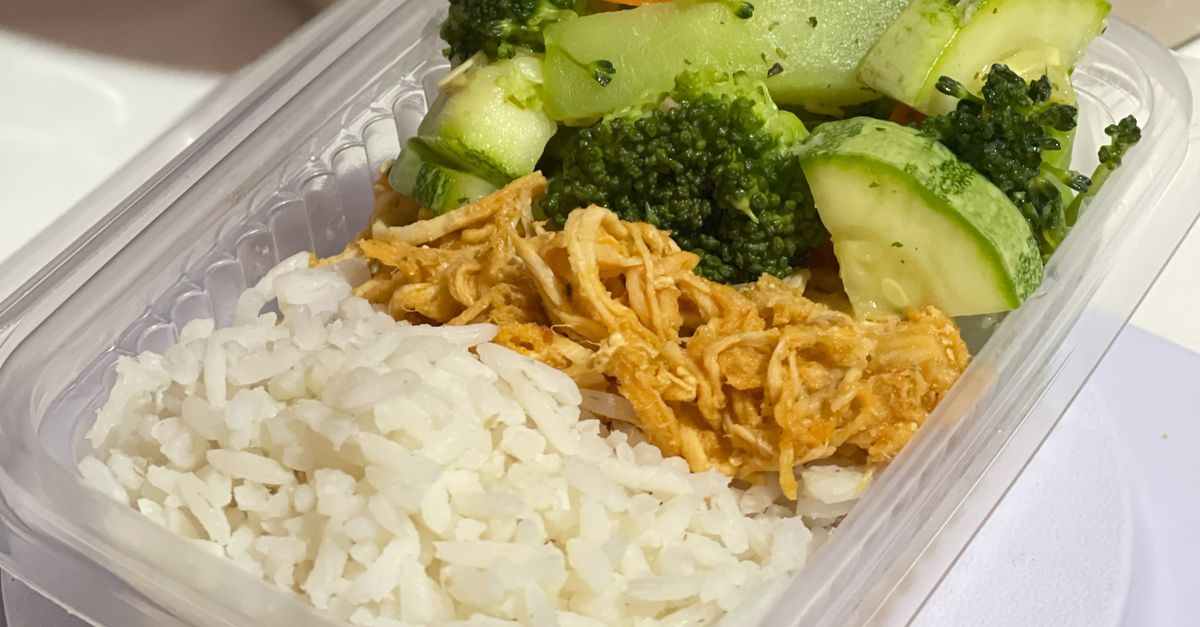
Weight loss meals are meals that help you stay within a calorie deficit while providing enough protein, fiber, and nutrients to keep you satisfied.
The goal isn’t to eat as little as possible. It’s to create meals that are filling, flavorful, and appropriately portioned for your needs.
A balanced weight loss meal often includes:
- A strong protein source: Chicken, turkey, eggs, lean beef, fish, Greek yogurt, tofu, or another protein-rich option.
- Fiber-rich carbohydrates: Vegetables, beans, potatoes, fruit, oats, or whole grains.
- A moderate amount of healthy fat: Avocado, olive oil, nuts, seeds, or cheese.
- A portion that fits your daily calorie target: The same food can work for weight loss or weight gain depending on the serving size and the rest of your day.
(This is usually the part where I’d hand you a link and a sales pitch. Not yet. First I want you to actually understand the difference, because once it clicks, everything else gets easier.)

What are weight gain meals?
Weight gain meals are designed to help you consistently eat enough calories to support weight gain, strength, or muscle development.
If you’re training regularly but struggling to gain, the issue may not be your effort in the gym. You may simply need more total food throughout the day.
Weight gain meals typically include:
- Plenty of protein: Protein supports muscle repair and recovery.
- More carbohydrates: Rice, oats, potatoes, pasta, beans, fruit, and grains can help fuel workouts.
- Energy-dense fats: Avocado, olive oil, nuts, seeds, nut butter, and cheese can add calories without requiring huge portions.
- Larger or more frequent servings: Adding a meal, snack, or slightly larger portion can make a meaningful difference over time.
The key is still balance. Weight gain doesn’t have to mean relying on ultra-processed foods or eating until you feel uncomfortable. Fresh, satisfying meals can help you build a calorie surplus in a way that feels more supportive.
And here’s the mistake I see most often with people trying to gain: they fixate on protein and forget that total calories are what actually move the scale. More rice, an extra snack, a slightly bigger portion. That’s usually where the progress was hiding all along.
A simple macro starting point for each goal
There isn’t one perfect macro split for everyone. Your preferences, training schedule, digestion, and lifestyle all matter.
Still, these ranges can give you a practical place to begin:
| Goal | Protein | Carbohydrates | Fat |
|---|---|---|---|
| Fat loss | 30–35% | 35–40% | 25–30% |
| Maintenance | 25–30% | 40–50% | 20–30% |
| Muscle or weight gain | 25–30% | 45–55% | 20–30% |
You may also find it easier to think in grams instead of percentages.
A commonly used starting range for active adults is approximately 0.7–1.0 grams of protein per pound of body weight per day. People pursuing fat loss or muscle gain may benefit from the higher end of that range, depending on their individual needs.
Carbohydrates can support workout performance, energy, and recovery. Dietary fat helps with satisfaction and supports important body functions. You don’t need to eliminate either one to make progress.
The best plan is usually the one you can follow consistently.
How to choose between weight loss meals and weight gain meals
Ask yourself three questions:
1. What is your primary goal?
Are you hoping to reduce body fat, maintain your current weight, improve your general health, or build muscle?
Your answer helps determine whether you need a calorie deficit, maintenance intake, or calorie surplus.
2. How are you performing and feeling?
Notice your hunger, energy, workouts, sleep, and recovery.
If you’re constantly exhausted or thinking about food, your plan may be too restrictive. If you’re training hard but never gaining strength or body weight, you may need more calories.
Progress is about more than the number on the scale.
3. Can you follow the plan during a normal week?
A nutrition plan should fit your schedule in Killeen, Copperas Cove, Harker Heights, or Fort Hood, not require you to become a completely different person.
That’s why prepared meals can be so helpful. You have a portioned meal delivered fresh and ready to heat and serve in about 5 minutes when work runs late, workouts take longer than expected, or cooking dinner simply isn’t happening.

How prepared meals make macros easier
I know firsthand how hard consistency is. I’ve spent years around people whose schedules simply don’t cooperate, nurses working twelves, parents shuttling between practices, soldiers whose days don’t end when they planned. The pattern I kept seeing wasn’t a motivation problem. It was a logistics problem.
That’s the whole reason The Meal Prep Nurse exists. Since 2016, we’ve been built around one idea: nutrition knowledge should come with a practical way to actually use it. Every meal is created with guidance from Registered Nurse Ashley Newman and our certified nutritionist with 7+ years in health and fitness, made from fresh ingredients, never frozen, and portioned with macro-based nutrition in mind. You pick a bundle that matches the way you eat:
- 5 meals: A simple way to cover a few lunches, dinners, or breakfasts.
- 10 meals: Helpful for building structure into most of your workweek.
- 15 meals: A more complete breakfast, lunch, and dinner solution.
That information gives you a clearer picture of what you’re eating without requiring you to weigh every ingredient or guess at restaurant portions.
That’s it. No spreadsheets, no food scale on the counter, no math test at dinnertime.
Your meals don’t have to change completely when your goal changes
One of the most helpful things to remember is that weight loss meals and weight gain meals don’t need to be made from completely different foods.
The difference may simply be:
- A smaller or larger serving of rice, potatoes, or another carbohydrate.
- An additional snack during the day.
- More or less added fat, such as avocado, olive oil, or cheese.
- One meal versus two meals around your workout.
- A different number of meals included in your weekly routine.
The foundation can stay the same: fresh food, enough protein, satisfying portions, and a plan that works in real life.
That flexibility can make your nutrition approach feel much less intimidating.
A supportive approach works better than perfection
You don’t need to choose the “perfect” macro split on day one. Start with a reasonable target, use meals that make consistency easier, and pay attention to how your body responds over several weeks.
If your goal is fat loss, a modest calorie deficit and protein-focused meals may be a helpful starting point. If your goal is muscle gain, consistent strength training, enough protein, and a small calorie surplus may serve you better. If you’re maintaining your weight, focus on balanced meals that give you steady energy and satisfaction.
If you have a medical condition, are pregnant or breastfeeding, or have a history of disordered eating, speak with a qualified healthcare professional before making significant changes to your nutrition.
A last thought before you go
I built The Meal Prep Nurse around a simple idea: you deserve meals that support your goals and fit your schedule, without nutrition becoming another job.
Whether you’re in Killeen, Copperas Cove, Harker Heights, or Fort Hood, you don’t have to figure this out alone. If you ever want a hand with the logistics, that’s literally what we do, one fresh, ready-to-heat meal at a time. And if all you needed today was someone to cut through the noise, I hope this did that too.
Ordering and delivery details
Ordering is simple, and we’re always happy to help if you have questions.
- 24-Hour Turnaround orders: Available Monday through Thursday with a 5:00 PM cutoff.
- Meal Prep Sunday orders: Order by Friday at 7:00 PM.
- Friday orders: Delivered on Sunday.
- Saturday: No ordering available.
- Sunday delivery window: Between 5:00 PM and 7:00 PM.
- Questions or help ordering: Call 254-223-8743.
Shop fresh meal prep bundles or learn more about wellness coaching if you’d like more personalized support.